Monday, June 29, 2015

The Room & The Room 2


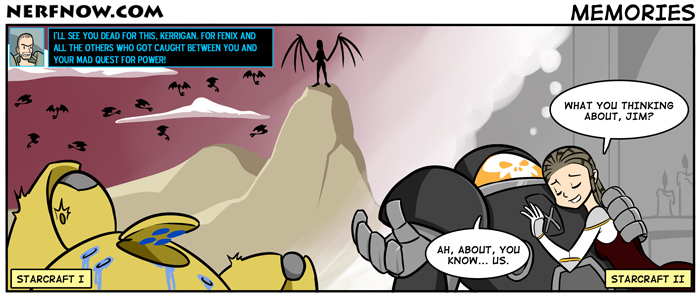
By Fireproof Games. One of the first (two) games in which I found that mobile devices really can be gaming platforms.

The Room and its sequel The Room Two are as a game a strange breed: it's a detective story meets puzzles meets Alone in the Dark (the first survival horror, not the idiotic sequels).

You get invited to a mansion in which you are faced with a strange box which you have to open, using all the hidden locks and compartiments, following some notes left by the original owner of the box (who seems to be your uncle or something). One of the first items you find and assemble is some kind of monocle or eyepiece through which you can see "the unseen".

The diffent levels seem like a slide into insanity: there's the box in the room, which contains another kind of box, which contains... well... another room with some boxes, which leads you to a planetarium, a pirate ship, a mausoleum, a room in London... without ever leaving the room you started from. Each level brings you closer to the Great Discovery, the knowledge your uncle first unearthed. The two games connect beautifully to each other, and the final scene brings you full circle  to the beginning.

If the kind of story feels familiar, the setting will only reinforce that familiarity: this is obviously a Lovecraft story and setting: some scientist from the not-too-distant-past, let's say the twenties or thirties, leaves parts of his investigation for others to continue. He hints constantly to the fact that this investigation will turn everything we know about reality upside-down, but that the results will not and cannot be accepted by the scientific community in particular, or by humanity at large.

The atmosphere, the background sound and music is your typical survival horror setting: silence, only some omineous creaking in the back, some quiet piano music, darkness with only your investigation object fully lighted but the rest of the room clad in shadows. Each passing between levels getting a bit more weird and scary, and each of the two "endings" giving you the full Lovecraft "shit-that-was-scary-even-if-I-don't-understand-what-the-hell-happened" treatment.

The puzzle-like gameplay is very well done, although a bit too linear for my taste. The game requires you to think, think hard, think that hard it will even feed you hints; yet the replayability is not existant: you get item A and use it in slot X, after which you get item B and use it in mini-puzzle Y. Remembering the puzzle means boringly sliding through the levels. But it's challenging and surprisingly entertaining the first time round, at least!

But, Tim, where's the link to Alone in the Dark, you ask? Well, obviously the starting position in both games is the top room in the mansion. Also (without spoiling much) the ending position in both games is going out of the big front doors of the mansion. Just like AitD, you end up in the sunny front lawn wondering what the fuck you just saw and experienced. The feelings you leave with, the typical Lovecraftian 'damned if this is the real reality we're thoroughly screwed', are completely similar.

A very recommended game, support this gamestudio... please!
(and... OMG THE THIRD PART IS COMING OUT THIS SUMMERRRRR)

Thursday, January 15, 2015

Dragon Age: Inquisition

this review is certified spoiler free...


After some 50+ hours of playtime, I finished the game... but it could have easily been 100+ hours.
As hyped as I was when I started to play, as much as I enjoyed those 50+ hours, I finished it because I was bored and frustrated.

For people not familiar with the Dragon Age franchise. This is your hallowed Bioware RPG, on the same level of magnificence as Mass Effect. Bioware wanted to make a Baldur's Gate RPG, but could (or wouldn't, I dunno) get a D&D world license; so they just created their own fantasy world, Thedas.
First there was Dragon Age: Origins, which was MAGNIFICENT for that day and age. Playing the RPG, you really had the feeling that one misplaced comment to one of your companions would alter the flow of the game immensly, so the urge for replays was (and is! if only the graphics weren't so outdated) always present. The world was immense, though constricted, and DLC's added to the enormity of it.
After that there was Dragon Age II, in which the graphics where seriously upgraded. unfortunatly you could tell it was hasty work, with reuse of dungeons and cellars all over, and a messy flow of events at the end. It was also constricted to one city, Kirkwall, and its outskirts. On top of that it lacked the wide range of directions the game could take you: whether you where helpful  or simply hostile to the city officials for example, you would always end up "Champion of Kirkwall" at the start of the third act.

And now the third installment came out, Dragon Age: Inquisition. From the start, it becomes clear that DAII is actually the prequel of Inquisition, rather than Inquisition being the sequel of DAII. It's a subtle but interesting difference to note. The story of Inquisition actually starts at the beginning of DAII, where Varric is dragged in to be interrogated by Cassandra. Varric then recounts the story of the Champion and explains how he/she is involved in the Kirkwall Mage Rebellion, the direct precursor of the starting event of Inquisition. Cassandra, who you never meet in DAII is the first companion you encounter in Inquisition, Varric the second.

Also interesting to note, is that to fully appreciate the events in Inquisition, you have to have played the first two Dragon Age games - obviously - but also one specific DLC of DAII: Legacy - Blood of the Hawke. Because I didn't like DAII that much, I wasn't going to buy it; but because in the run-up to Inquisition I saw one blogger actually recommend it, I bought and played it... and was so glad I did during the Great Reveal in the story of Inquisition.

Now, the game itself.

The graphics in DA:I are simply wondrous. It's one of those games where you can go stand on a cliff's edge, and just enjoy the view. Texture-wise it's also a big improvement even from DAII. There were two things that bothered me: first, when in a wet environment, the textures seemed to glow as if it was raining slime. And second, the people in the game all suffered from "the uncanny-valley" syndrome.
This leads for example to the situation where you use the character creator to make a great looking character for yourself... but then when you see him move and talk...


The world is HUGE... no, really, HhUuGgEe (notice the 3D effect). The barriers from DA:O and DAII are broken and you can jump and run everywhere on the map you want. It's really Dragon Age meets Skyrim. The first zone, Hinterlands, is well and good for hours and hours of playtime, three/four more zones like that... and at a certain point, the story asks you to hold it, and progress by selecting a "the story continues" mission. For a completionist like myself this equals to absolute horror!
Imagine my (first) shock and (then) joy when after the progression mission which suggested everything would be solved and ended, the full DA:I story only began! The main antagonist was introduced, and six or seven more evenly huge zones opened up!
Unfortunatly, that's when it was starting to go wrong: there are three more progression quests which present themselves far quicker that you can play through all of the content. And while you can just ignore the progression, the whole affair starts to get disconnected from the Story: you get the feeling you're playing for nothing. The untranslatable word in Dutch is "bezigheidstherapie".

The Story is fantastic, as it should be coming from a studio like Bioware... although... Like I said, the story actually starts in DAII, and it becomes complete halfway DA:I. There's one Big Choice to make (Mages versus Templars, the classical choice in the Dragon Age series) and I'm sincerely curious to how the rest of the game would play out if I'd had chosen for the other side. Unfortunatly, it goes fastly downhill from the halfway point on: the Big Choice between mages and templars is the only real, significant, gamechanging choice; the progression points become less sincere, and the ending seems to have been hacked together the last month or so, judging on how fast and meaningless it plays out. Apart from the after-credits cliffhanger (keep watching, guys) which was again really interesting.

Then there are the controls. At first they just felt a little weird, but as soon as you realize what's bothering you, it starts to become enervating and subsequently frustrating.
The game was built for consoles, and while the previous games had the possibility to use your PC's peripherals to dig deeper into the details of the RPG (which it is), DA:I has none of it: there are no real numbers or they are meaningless; there is no approval rating for your companions, or not one that matters apart from opening up some extra conversation options or, y'know, romance options; inventory management sucks balls; fighting big monsters feels like having to survive long enough to start a cutscene; and so forth
It has become a console game, ported to the PC... and the general feeling in the PC world is that we may rot for all Bioware cares.

The other parts of the game, the music, crafting, extra make-the-world-alive features like NPCs and random events are nice, some very nice... but they lack the punch needed to get over the main gripes of the game. Also the political meta-game first seems promising, but then you realise the only reward from it is an item here and there, and even more power points to advance more quickly to the progression quests.

I had to force myself to play the finale, and I'm going to force myself not to play again with another character until Bioware releases fixes (mainly for PC players), or some big DLC.

Seriously, I still wonder how I could have been so hyped during the first ten-twenty hours of the game, and evolve to be so disappointed during the last ten-twenty hours of it...
Tuesday, November 25, 2014

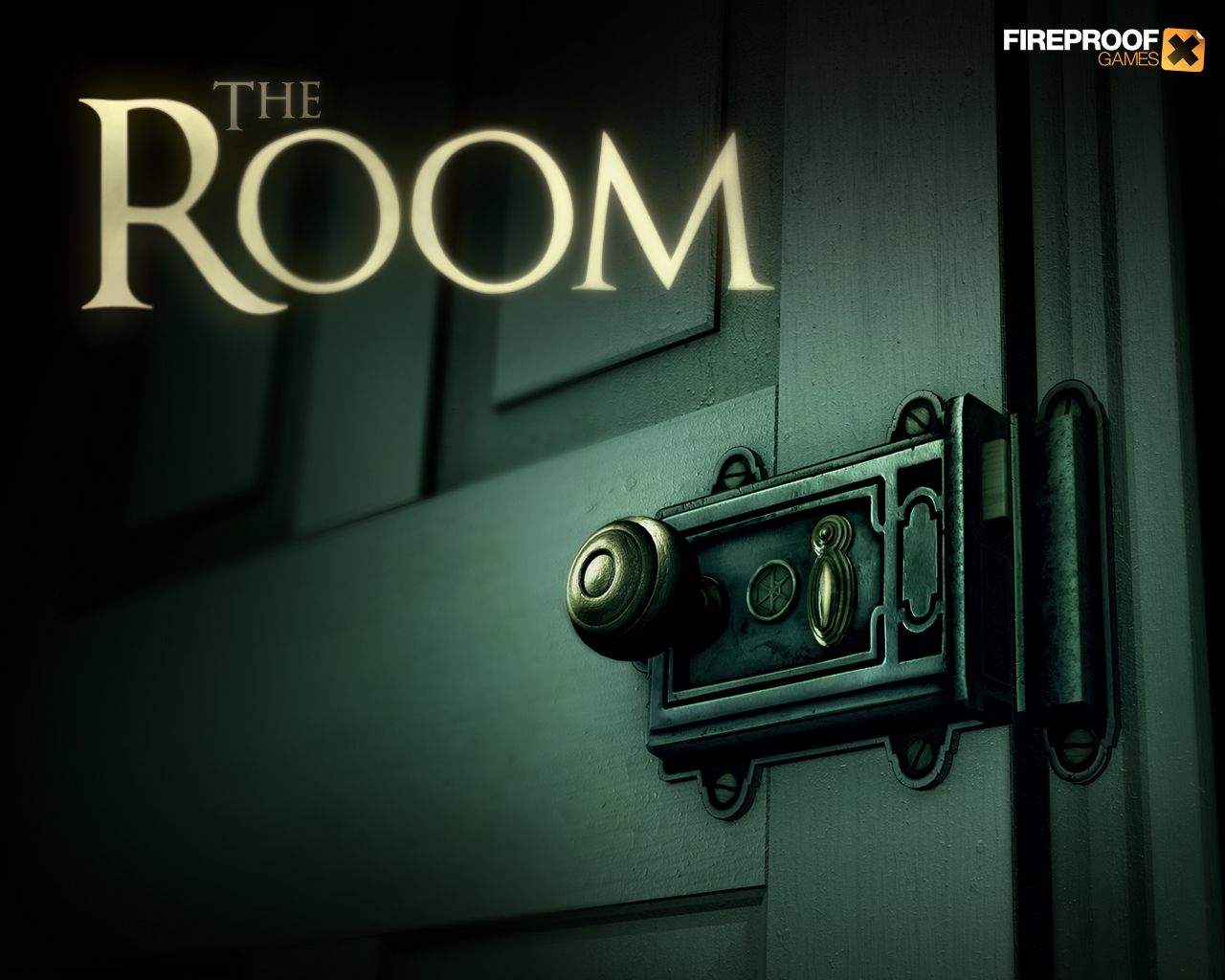
Starcraft II : Heart of the Swarm

(This is a re-post from an old Google+ entry)


In five days, without really going #gaming   #nerd  , I finished the single player campaign of #starcraft2  : Heart of the Swarm

The Good:
- The gameplay and difficulty level are "just right": it's challenging, without a gaming journeyman like myself starting to cry. The different missions have a lot of diversity, and a lot of deviations from the standard RTS gameplay (build a base and conquer the map) are really, really fun
- The immersion, feel of the game, and general atmosphere is great: the cutscenes are really engaging, and the gaming sounds pull you into the world of a hive of bio-engineered organisms. My girlfriend at times looked at me disgusted from just hearing the sounds of the game
- The story progresses very nicely: even though the story reaches a closure-point, there's still enough going for me to really want to play the third part of the starcraft 2 trilogy... even though I can't stand the Protoss, or the way they play

The Bad:
- It's a bit too short: even for a "mere" €30 game I expect a bit longer playtime than... what is it, 10-15 hours ? I know there's a multiplayer aspect, but I didn't have to buy the second part to already have that.
- The Story (I'm really starting to hate Chris Metzen): not only am I as a player able to notice the holes in the story, the contrived situations and actings, and the deus-ex-machina constructions; but I'm getting the feeling the writers (led by Metzen) just plainly forgot what exactly was happening in the first part of the trilogy: Wings of Liberty. For example: the Xel'Naga artifact is clearly the Main Plot Line of the complete trilogy, but the writers FAIL to point out the connections between where it appears in the second installment, to where it was left in de first installment. Worse, they create confusion about it: is that device in the last cutscene the artifact ? If it is, it violates the storyline seriously, if it isn't then it's a look-alike deus-ex-machina... which makes it just bloody stupid

The Ugly:
- Having to be online, having to login to be able to play my single-player game. Luckily it's not as stupidly implemented as Diablo III or Simcity, and there's only the battle.net lobby you log into, without any repercussions to the game itself

So was it worth it... well yes, I'd still recommend it as a example of how a good RTS should be, I had fun, and I really don't regret buying it.

Monday, November 24, 2014

Lord of the Rings Online: not your standard MMO

(very short re-post from an old Google+ entry)


Lord of the Rings Online (LOTRO): not your standard MMO
(from Escapist Magazine's Critical Miss)

Broken Age

(This is a re-post from an old Google+ entry)


Just finished #BrokenAge Act1... and I find myself seriously baffled about how an adventure game in this day and age can still leave me silent before the computer at the end... awestruck.

The game is... actually two games. You choose at the beginning which character you want to play, but you can always switch characters. The two characters follow a completely separate story, one obviously in space, the other obviously in a rural little village. It's not like the two stories connect, or need each other's items, or even need knowledge from one story to another. You can even always switch from one story to the other if you're fed up or need a little break or inspiration.
So why two stories eh ? I'll let you figure that out on your own, not spoiling anything here.

Each story on its own is (looking for adjectives here)... well, great.. no, super, no, I mean, five minutes into each one I felt like screaming "WHAT THE HELL" at my screen. It's not anything you're used to, guys !

The gameplay is smooth, fun, not too difficult, sometimes a little slow on loading, but really intuitive. The same counts for the puzzles: while they're not your standard Adventure Game puzzles, you always have a feeling of what the answer is going to be... and often you'll still find yourself giggling about how original and funny the puzzle unravels.

A special mention for the voice acting: Elijah Wood ! Will Wheaton ! Jack Black ! The actress that plays Vella is great !

And then, the art style. Children's drawings mixed with the most intricate animation I've ever seen. I think they just invented a new genre, because I really can't describe it or do it justice by trying... but again: it's more than great !

In the past, Tim Schafer gave us epic stories like Monkey Island and Grim Fandango, adventure games that will NEVER leave the Collective Memory... I find myself equally ushered in a new age of Adventure Gaming with Broken Age

Beware though: the game is only Act 1... naturally it ends on a cliffhanger of Epic Proportions: I'm still trying to piece together what I know (what I really know) about the story and philosophize about how It Was All Possible Like This.

I want to end with a cliché AAAA++, but I don't think my keyboard has enough AAAAAA's (or plusses)

Ace Attorney V: Dual Destinies (Nintendo DS)

(This is a re-post from an old Google+ entry)


Halfway through the first case:
- Same good old Phoenix Wright: the music, the moves, the screen flashing a bit as feedback on what's being said... it's good to be back !
- It's got real cutscenes ! Voiced and everything !
- The 3D is great ! Although you'll probably be able to enjoy it without
- New investigation technique by analyzing emotions... I only got to do the introduction of it, but it shows a LOT of potential for making things very-very hard
- The baddies are double-teamed by Phoenix Wright AND Apollo Justice... which can only turn out to be awesome
- The comedy factor is again very much there. Phoenix, after hearing a girl fawn on Apollo Justice: "honestly, hearing her you'd think Apollo was some kind of ancient god !! .... wait ... "
- All the characters and the world itself move a little bit more, making the game just that little bit cooler

Honestly, my 3DS is recharging now.. which is the only reason why I took the time to write this piece

Guild Wars 2

(This is a re-post from an old Google+ entry)


And so I fell for #guildwars2  . Been playing it for a few days now, so I don't have a clear view on everything yet, although there's a lot of things (mostly praise) I'd like to say about it.

First of all, the pricing model. Unlike most MMO's, this one uses a pay once, play forever model: you buy the game, and play it (and all of its updates) indefinitly. There is a microtransaction model attached to it, but unlike for example Lotro, there's no pressure whatsoever to ever employ it. The result is that there is no pressure to play it, there's a possibility to be really casual about it. Unlike for example TSW, where if you pay for a month, you better play as much as possible that month !

The overall gameplay, questing, moving through the world, choosing to explore, fight, quest, craft, etc has been done beautifully. I've never played GW1 so I don't know how much has been taken from it, but I've never seen anything quite like it.

There is only one quest: the Story. Like for example SWTOR or TSW or even Lotro this is the Thing That Matters in the world. There is not much progression beyong the Story, even though you can level.
The side quests are not quests at all. They are hotspots where 'things have to be done'. What things ? Well, that's up to you: there's a list of tasks to do when you are in the hotspot, and each little task you actually do contributes to the overall 'quest completion'. It is very well possible to progress through these hotspots without fighting at all. The tasks can be very, very mundane, like feeding the animals or planting crops. This is something I liked in Lotro: even though your hero has his own story, the places and people you pass by each have their own priorities, and your hero is just a minor helping detail... call it a slice of humble pie every now and then.
Aside from the side quests, there are frequent events (mostly connected to the hotspots) in which everybody who happens to be nearby can assist. A town comes under attack, an NPC has to be escorted, ... These clearly call back to the Public Quest system of WAR, or the invasions of Rift, only this system has been very well implemented.

Moving through the world works mainly with teleportation. This I think is a pity, because it makes the world feel smaller. On the other hand, exploring the part of the world you're in is ingrained in the game as a challenge: for each part of the world, you're expected to find all teleportation points, points of general interest, panorama's (each with their own little cinematic of you enjoying the view) and skill challenge points. The last two are especially entertaining for MMO Explorer types:
A panorama is in some cases 'hidden' on the top of a building or natural structure, which begs the challenge of getting there. A skill challenge encompasses finding something, fighting something, or getting somewhere.
(The skill challenge of getting on top of a floating rock/tree thing at the start of the Sylvari map still bugs me endlessly... I always seem to jump wrong)

The fighting system is completely new to me. The challenge of 'getting to know your class' has effectively become a mission impossible. Not only do the fighting skills depend on which kind of weapon you're wielding, but also the combination of weapons and even whether you wield a weapon in your main or offhand makes the skillbar look completely different.
Aside from that there are skillpoints and traitpoints that you invest to get a plethora of other skills that have nothing to do with the weapon you wield, but with your own playstyle.
Fighting at itself is a little more challenging. You can swing your sword, but if there is no enemy closeby, you don't hit anything. Also, if you are out of range of something you only notice this after you've activated your expensive, several-tens-of-seconds-cooldown skill. More fighting skills are inherently area-of-effect, meaning that including neutral mobs in a fight becomes more of a hazard.
And then there is fighting while underwater (with different weapons of course), fighting while defeated (a last-ditched effort to get back on your feet), fighting with objects that happen to lay around the hotspot, or in forms that happen to be important to the hotspot.

Crafting is something which I didn't really explore fully, yet. I did see however they took a page from the WAR crafting system, by allowing experimentation with ingredients.

And finally there are the little details which speak of an MMO which took a lot of lessons from other succesful or failed MMO's: access to your bank while crafting, simultaneous harvesting from a resource node, no more reading walls of text for quests, voiceovers when they matter, scouts introducing you to the problems (hotspots) at hand, being able to help/revive other players without being grouped, automatic downlevelling to the region you're in so no more one-shotting when helping low-level friends, and a lot of other little things which make the experience all the more enjoyable.

The big downside to Guildwars, for me, is the Big Story behind it. Up until now, I haven't really seen it and for my characters their Story quest is not really a big one. Also, the GW fantasy universe sometimes looks too sci-fi for me, with the portals, teleporters, robots... it's like the world writers don't know whether they want fantasy, steampunk, or outright sci-fi.
I like a spun-out, consequent universe behind a gaming world: the Warcraft World (pre-TBC), Lord of the Rings, Warhammer, Cthulhu, Star Wars, ... I can't seem to connect to Guildwars, and that's a pity. But maybe it'll get better as I keep on playing it casually.